



Artificial intelligence is evolving faster than ever, and the hardware behind it is improving just as quickly. If you follow ai hardware news today, you will notice that chipmakers, cloud providers, and device manufacturers are racing to build faster, more efficient processors. These innovations are shaping everything from data centers to personal computers and smartphones. Understanding these changes helps businesses, developers, and everyday users make better technology decisions.
Why AI Hardware Matters More Than Ever
Software may receive most of the attention, but hardware is what makes advanced AI possible. Powerful processors handle massive calculations that train and run AI models. As AI applications become more complex, traditional processors alone are no longer enough.
Modern AI hardware focuses on three goals: higher performance, lower power consumption, and faster response times. These improvements allow businesses to process large datasets more efficiently while reducing operating costs.
AI Hardware News Today: The Biggest Industry Developments
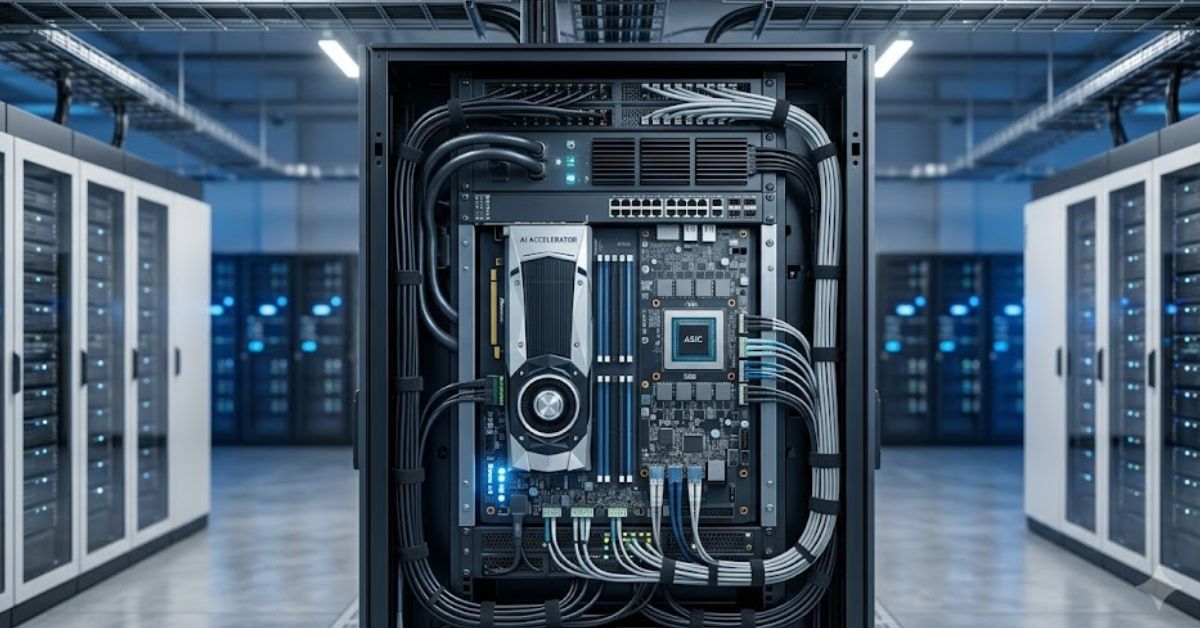
The biggest stories in ai hardware news today revolve around custom AI chips, next-generation GPUs, and dedicated AI processors. Major technology companies are investing billions of dollars in specialized hardware instead of relying only on traditional CPUs.
Cloud providers are expanding AI infrastructure to meet growing demand for generative AI services. At the same time, hardware manufacturers continue releasing processors designed specifically for machine learning, image recognition, and natural language processing.
These investments show that AI hardware has become a long-term priority rather than a short-term trend.
Custom AI Chips Are Becoming the New Standard
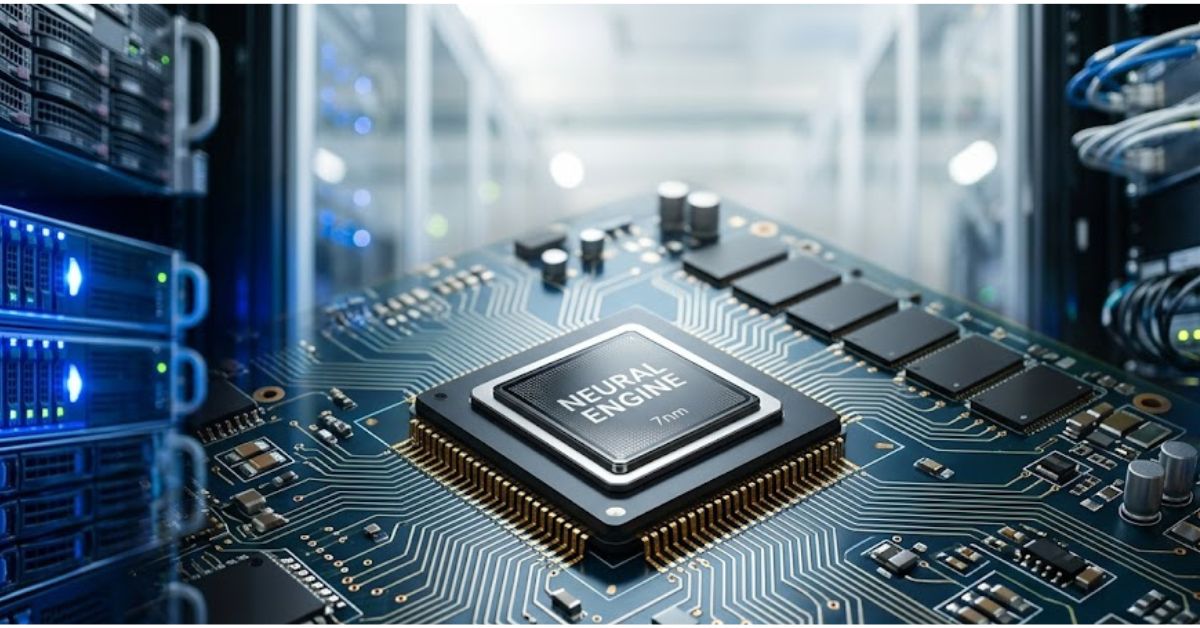
Many technology companies now design their own AI chips instead of depending entirely on third-party suppliers. Custom silicon offers better optimization for specific workloads, allowing faster processing with improved energy efficiency.
For businesses, this means lower operating costs and better performance. For consumers, it results in smarter devices that complete AI tasks more quickly without draining battery life.
This shift is one of the most important developments covered in ai hardware news today because it changes how future AI products will be designed.
GPUs Continue to Lead AI Computing
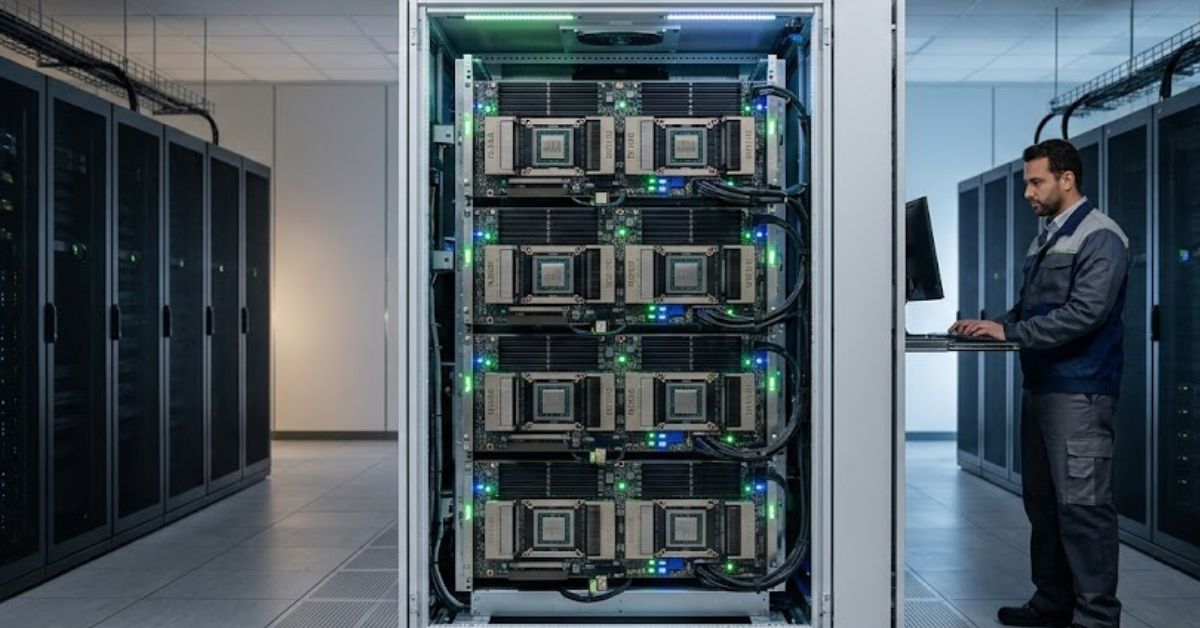
Graphics Processing Units remain the foundation of AI training. Their ability to process thousands of calculations simultaneously makes them ideal for large AI models.
Manufacturers continue increasing memory capacity, computing power, and energy efficiency. These improvements reduce training time and allow organizations to develop more advanced AI systems without expanding physical infrastructure.
Although new AI accelerators are entering the market, GPUs still play a central role in enterprise AI computing.
AI PCs Are Changing Everyday Computing
Artificial intelligence is no longer limited to cloud servers. Modern laptops and desktop computers now include dedicated AI processors capable of handling intelligent features locally.
Tasks such as voice recognition, image editing, live translation, video enhancement, and productivity assistance can now run directly on the device. This improves speed while reducing dependence on internet connections.
As this technology becomes more common, ai hardware news today increasingly focuses on AI-enabled personal computers.
Edge AI Is Expanding Across Industries
Edge AI allows devices to process information without constantly communicating with cloud servers. This approach improves privacy, reduces delays, and lowers bandwidth requirements.
Industries benefiting from edge AI include:
- Manufacturing
- Healthcare
- Transportation
- Retail
- Agriculture
- Smart cities
Factories can detect equipment failures instantly, hospitals can analyze medical images more quickly, and autonomous systems can respond in real time.
Energy Efficiency Has Become a Competitive Advantage
Power consumption is now one of the biggest challenges in AI computing. Large AI models require enormous computing resources, increasing electricity usage and operational costs.
Hardware manufacturers are addressing this issue through improved chip architecture, advanced cooling technologies, and optimized memory systems.
Energy-efficient hardware benefits both businesses and the environment, making sustainability an important topic in ai hardware news today.
High-Bandwidth Memory Is Improving AI Performance
Memory plays a critical role in AI performance. High-bandwidth memory allows processors to move data much faster than conventional memory technologies.
The result is quicker model training, smoother inference, and improved handling of extremely large datasets. As AI models continue growing, advanced memory solutions will become even more valuable.
AI Data Centers Continue to Expand
Organizations worldwide are investing heavily in AI-ready data centers. These facilities contain specialized hardware designed specifically for AI workloads.
Modern AI data centers include:
- High-performance GPUs
- Dedicated AI accelerators
- Advanced networking systems
- High-speed storage
- Efficient cooling infrastructure
These upgrades enable companies to serve millions of AI requests while maintaining reliable performance.
AI Hardware for Small Businesses
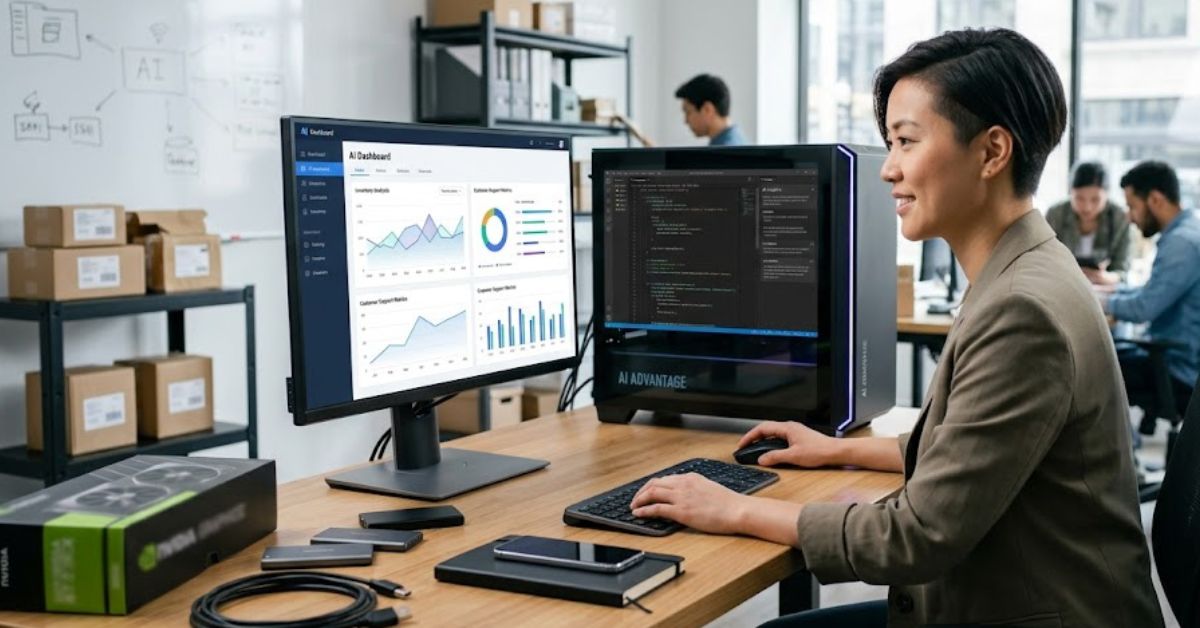
AI hardware is no longer limited to large technology companies. Small businesses now have access to affordable AI-powered computers and cloud services that improve productivity.
Examples include automated customer support, intelligent document processing, marketing analysis, inventory management, and cybersecurity monitoring.
Affordable hardware makes AI adoption possible even for organizations with limited budgets.
What Consumers Should Watch
Consumers interested in upgrading devices should pay attention to several important features:
- Dedicated AI processors
- Better battery efficiency
- Faster memory
- Improved graphics performance
- Long-term software support
These features help devices remain useful as AI applications continue becoming more demanding.
Challenges Facing the AI Hardware Industry
Despite rapid progress, several challenges remain.
Global demand for advanced chips often exceeds supply, leading to production delays. Manufacturing advanced semiconductors requires significant investment and highly specialized facilities. Companies must also balance increasing performance with responsible energy use.
Security remains another concern because AI infrastructure is becoming a critical part of business operations worldwide.
The Future of AI Hardware
Industry experts expect AI hardware to become faster, more specialized, and significantly more energy efficient over the next several years.
Future innovations may include improved AI accelerators, smarter memory technologies, better edge computing devices, and processors designed specifically for generative AI applications.
As organizations continue integrating AI into everyday operations, ai hardware news today will increasingly focus on practical hardware improvements rather than experimental research alone.
Final Thoughts
Following ai hardware news today helps readers understand where technology is heading and why hardware innovation matters. Faster processors, dedicated AI chips, efficient memory, and intelligent computing devices are creating new opportunities across industries.
Whether you are a technology enthusiast, business owner, developer, or everyday consumer, understanding these hardware trends will help you make smarter purchasing decisions and prepare for the next generation of AI-powered computing.
FAQs
What does ai hardware news today include?
It covers the latest updates about AI chips, GPUs, processors, data centers, and hardware innovations that improve artificial intelligence performance.
Why is AI hardware important?
Advanced hardware allows AI models to process information faster, consume less power, and deliver more accurate results in real-world applications.
What is the difference between a CPU and an AI chip?
A CPU handles general computing tasks, while an AI chip is designed specifically to accelerate machine learning and AI workloads.
Are AI PCs worth buying?
If you frequently use AI-powered features like image editing, voice assistants, or productivity tools, AI PCs can provide faster performance and better efficiency.
What is the future of AI hardware?
Future AI hardware is expected to deliver greater speed, improved energy efficiency, specialized processors, and broader support for edge computing and generative AI applications.